CO 119 Is Getting a Bikeway, Faster Buses and a New Bridge. So What Opens When?
Parts of the new CO 119 bikeway look nearly done, but the $165 million Diagonal rebuild won’t open all at once. Here’s what finishes when: the bikeway and stations in early 2027, Diagonal Flyer buses later that year and the Hover Street bridge by late 2027.
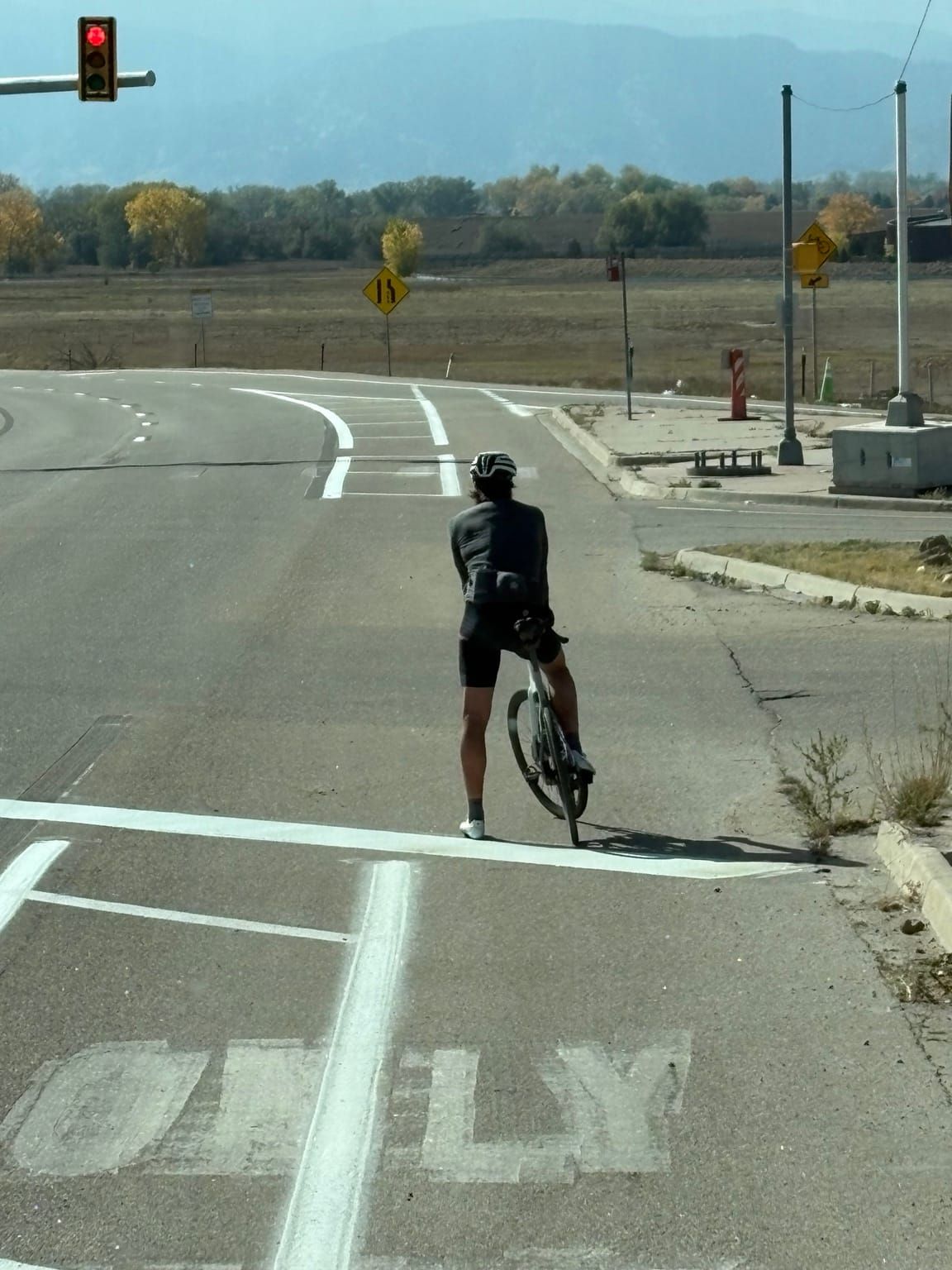
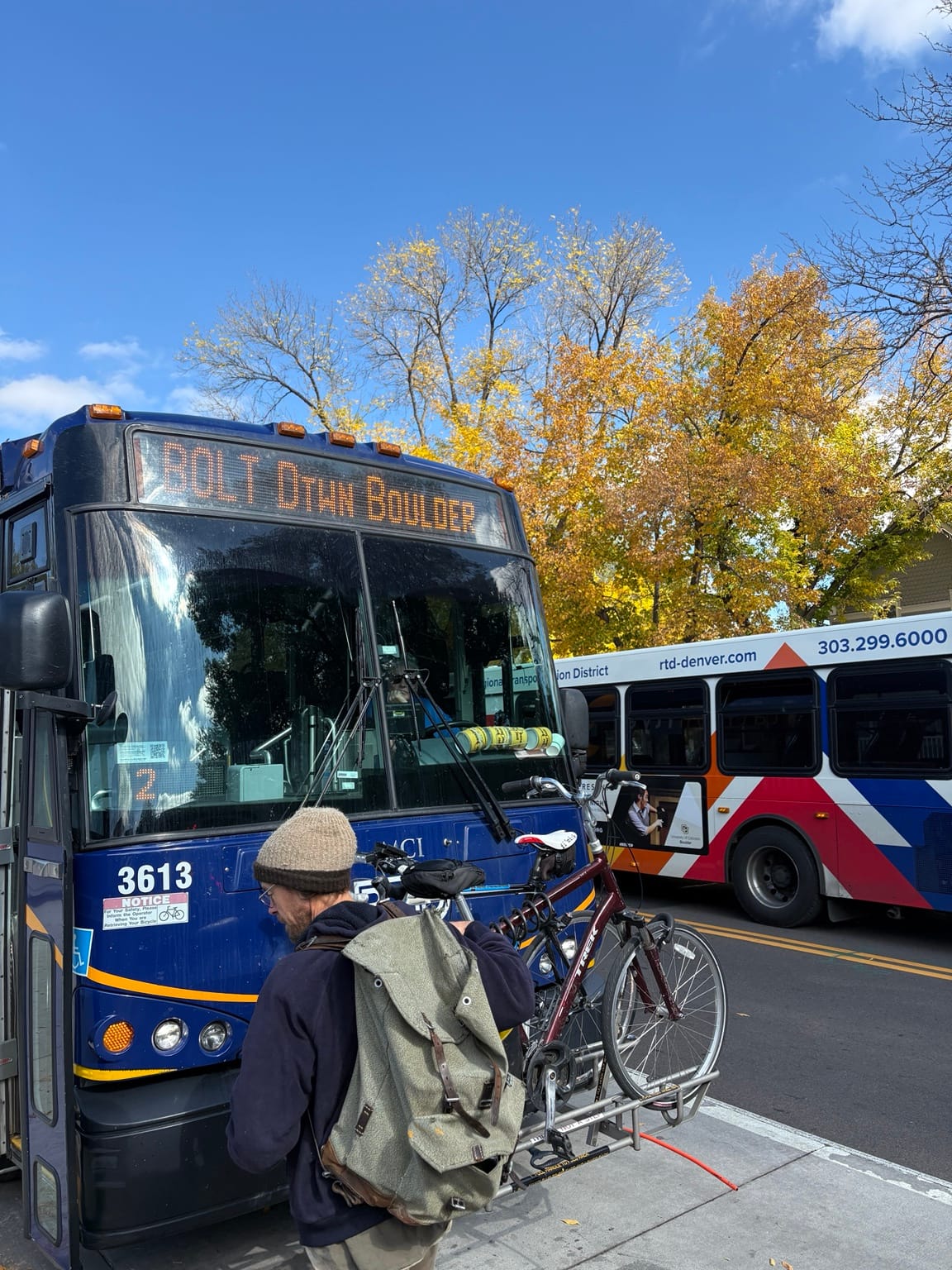
From a BOLT bus window this weekend, parts of the new bikeway along Colorado Highway 119 looked close to finished. I also saw a cyclist already riding the corridor.
That doesn’t mean the bikeway is open. It means the $165 million rebuild of the Diagonal Highway has gotten far enough that you can start to recognize the pieces, even with construction closures, temporary alignments and unfinished connections still in place.
The project is bigger than a bike path. Between Boulder and Longmont, crews are building a nine-mile separated bikeway, stations and bypass lanes for faster buses, redesigned intersections and a new bridge at Hover Street. The pieces are connected, but they won’t all open on the same day. Here is the order in which they’re expected to finish.
Why does this matter?
The Diagonal has a crash problem. According to CDOT’s project FAQ, there were 929 crashes on the corridor from 2015 through 2019. They injured 446 people and killed three. Seventeen involved cyclists and two involved pedestrians.
Coalition4Cyclists, a local advocacy group, counts 61 crashes involving cyclists on the Diagonal since 2010.
The danger became personal across Boulder County in July 2023, when 17-year-old national-team cyclist Magnus White was struck and killed while training on CO 119 north of Boulder. Plans for the separated bikeway were already underway, but his death put a human face on the corridor’s safety problem: cyclists were already using the highway, and a painted shoulder couldn’t protect them when a driver left the road. Thousands of cyclists have turned out for the White Line ride in his honor.
The danger hasn’t gone away while crews build the fix. On the morning of Aug. 24, 2026, 85-year-old Ralph Derose was struck and killed on southbound CO 119 near 83rd Street. According to the Colorado State Patrol, he was moving from the shoulder into the left lane to turn onto 83rd Street when an SUV hit him. He died at the scene.
Traffic pressure is growing too. Planning documents estimated daily traffic on the Diagonal would rise from about 45,000 vehicles to about 56,000 by 2040, a 25% increase. Volumes on different parts of the corridor have ranged from about 31,000 to more than 60,000 vehicles a day.
Already in place: the 63rd Street bridge and the first finished-looking segments
The most visible milestone so far came when crews lifted the 63rd Street bikeway bridge into place. It removes a crossing at highway level, so riders can keep going without mixing with turning vehicles.
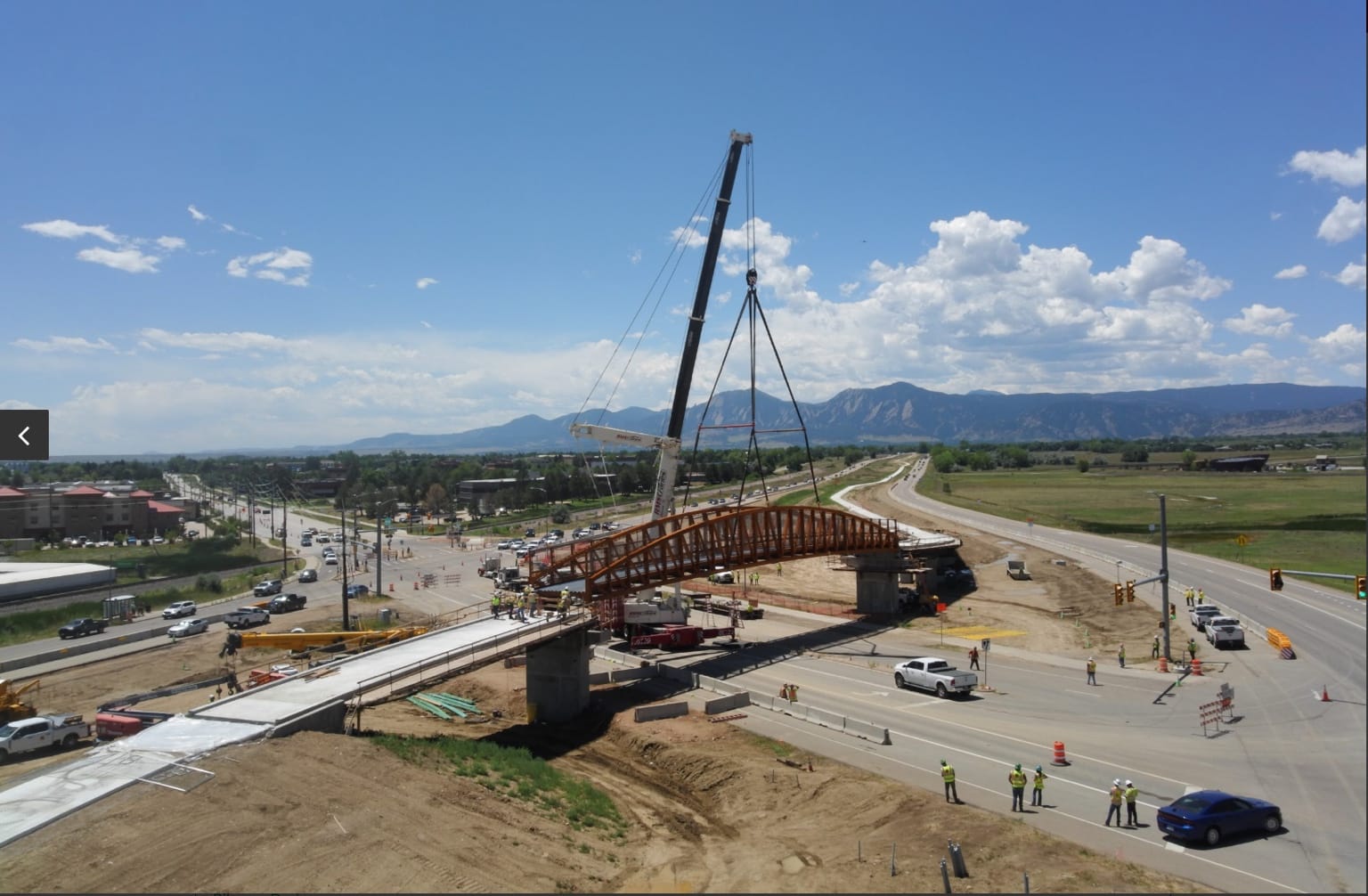
Some stretches of the path now look nearly done, including a section that runs beside the highway and under a crossing near Longmont. Riders may be tempted to use them. I saw someone doing exactly that this weekend. But the corridor is still an active construction zone, and there are "trail closed" signs still in place at entry points.
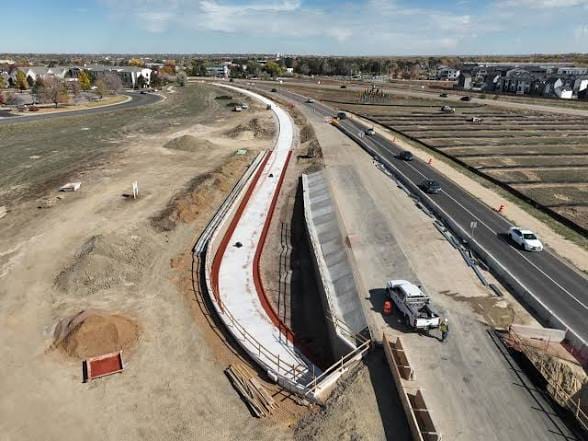
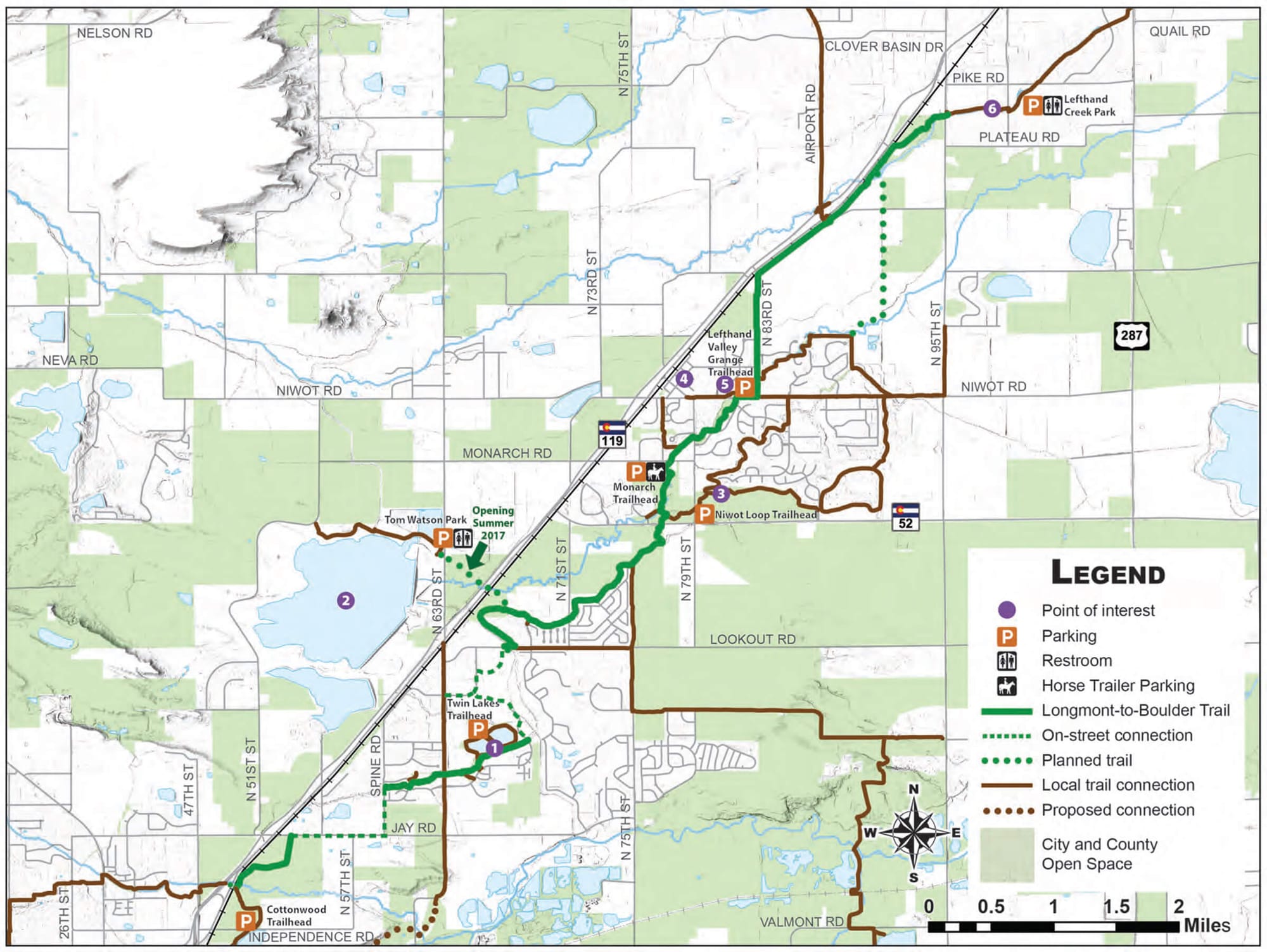
That cyclist isn’t unusual. People ride the Diagonal today because it’s the most direct line between Boulder and Longmont, even though much of the trip means riding a highway shoulder next to fast traffic. I wouldn’t ride that shoulder. The alternatives are safer in places, but they aren’t equivalent. The LOBO Trail is a set of trail segments, neighborhood connections and street crossings, not one continuous commuter route. Boulder County lists it at about 12 miles, roughly three miles longer than the nine-mile bikeway, and riders still have to use on-street connections in several places. You can also piece together Boulder County roads like Nelson Road and 63rd Street, but that adds distance and still means riding rural roads.
January to spring 2027: the bikeway, stations and intersections
The main CO 119 Safety, Mobility and Bikeway project is next. Boulder County expects it to be complete in January 2027. CDOT gives a broader target of spring 2027. The work runs from Foothills Parkway in Boulder to Hover Street in Longmont.
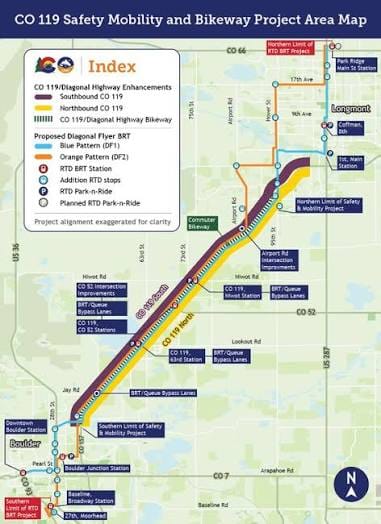
The bikeway. The centerpiece for cyclists is a paved path about nine miles long and 12 feet wide, separated from highway traffic and maintained for year-round use. It connects Boulder and Longmont far more directly than the patchwork riders use today. It also avoids several of the corridor’s most intimidating crossings. Riders will pass under major roads at Jay Road, CO 52, Niwot Road and the connection into Longmont, and the 63rd Street overpass carries them over that intersection.
There’s demand waiting for it. In a 2021 survey, 62% of 521 corridor commuters who didn’t already bike said they would be likely or very likely to commute by bicycle if a separated bikeway existed.
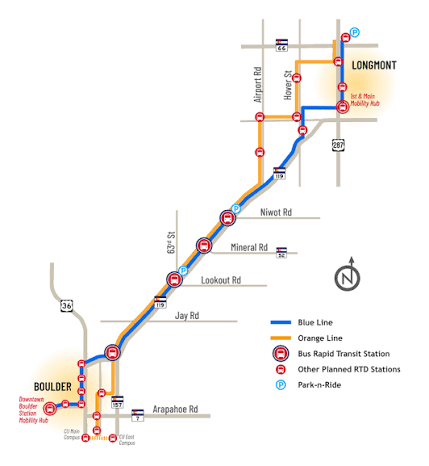
The transit infrastructure. The same phase adds or rebuilds bus rapid transit (BRT) stations at 63rd Street, CO 52 and Niwot Road, park-and-rides at 63rd and Niwot, and bus queue-bypass lanes at several intersections. These short dedicated lanes let buses get around backed-up traffic and get a head start at the signal. Stations at 63rd and Niwot will have bike-and-ride shelters, and the bikeway reaches transit without making riders cross highway traffic at grade.
The intersections. Drivers get redesigned intersections, signal changes and access restrictions meant to reduce the broadside and turning crashes described above.
Sometime in 2027: Diagonal Flyer service begins
Stations and bypass lanes are only infrastructure until buses use them. RTD says its new Diagonal Flyer routes are expected to start in 2027. A precise launch date and final schedule haven’t been announced.
The service won’t be a train on rubber tires, and it won’t have its own lane all the way from Longmont to Boulder. The time savings come from several smaller advantages: queue-bypass lanes, new stations, signal priority and fewer delays at the corridor’s worst intersections. CDOT says these improvements are designed to cut bus travel time roughly in half.
Today, the trip from Longmont to Boulder on the existing BOLT route can take nearly 45-60 minutes.
RTD plans to replace or expand today’s BOLT with two patterns:
- DF1, the Blue Line, will run between Longmont and Downtown Boulder Station via 28th Street. The proposed schedule calls for buses every 15 minutes at weekday peak, every 30 minutes midday and hourly in the evening, with fewer weekend trips.
- DF2, the Orange Line, will connect Longmont with Boulder Junction during weekday peak periods, with proposed 30-minute service.
Both patterns connect the highway stations to Longmont’s developing transit spine, including the new 1st and Main transit station. The final schedule could still change before launch.
For cyclists, the integration matters as much as frequency. The corridor works for mixed trips: bike part of the way, then put the bike on a bus or leave it in secure storage. The BOLT already carries riders and bikes between the two cities. The BRT investment is meant to make that trip faster and more reliable, not to create an entirely new travel market.
Late 2027: the Hover Street bridge
The last major piece is a related $38.3 million phase that began in summer 2026 known as the "Over Hover." Current left-turn restrictions are expected to stay in place through late 2027, which makes it the part most likely to outlast the rest of the corridor work.
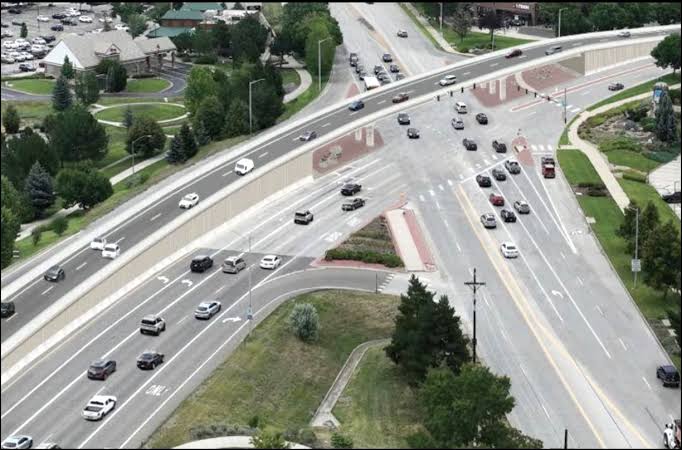
At Hover Street, westbound CO 119 will rise onto a new three-span bridge while other movements are reorganized underneath. It’s a targeted overpass, not a full freeway interchange. Longmont says the design removes more than 20 vehicle conflict points and shortens pedestrian crossings by as much as 75%. The city projects 40% to 50% fewer crashes, about 50% less peak-hour delay and a 28% drop in greenhouse-gas emissions from smoother traffic. Those are modeling estimates, not guarantees, but they explain the price tag.
The bridge is for cars, but it matters to people who will never drive over it. The Hover project closes the last major gap between the regional corridor and Longmont’s local trails and streets.
What changes when it’s all done?
For drivers, the project promises fewer conflict points and less time stuck through several signal cycles. For bus riders, it builds the base for more frequent service that can get around congestion instead of sitting in it. For cyclists, it replaces the choice between a highway shoulder and a roundabout patchwork of trails and backroads with a direct, separated route.
The Diagonal Flyer will still be a bus sharing most of the highway with cars. Rail between Boulder and Longmont is still unresolved. And a new station at Niwot Road only helps people who have a way to get to it.
For now, I’ll keep watching it come together from the BOLT window. On this weekend’s ride I could see the 63rd Street bridge, finished-looking stretches of path and new underpasses. Next year, I’d like to ride the whole thing instead.
First, everyone has to survive the construction schedule.