Longmont Residents Are Asking: Why Should We Pay Twice for Passenger Rail?
Longmont transportation leaders schedule a third forum to answer questions about the Colorado Connector.
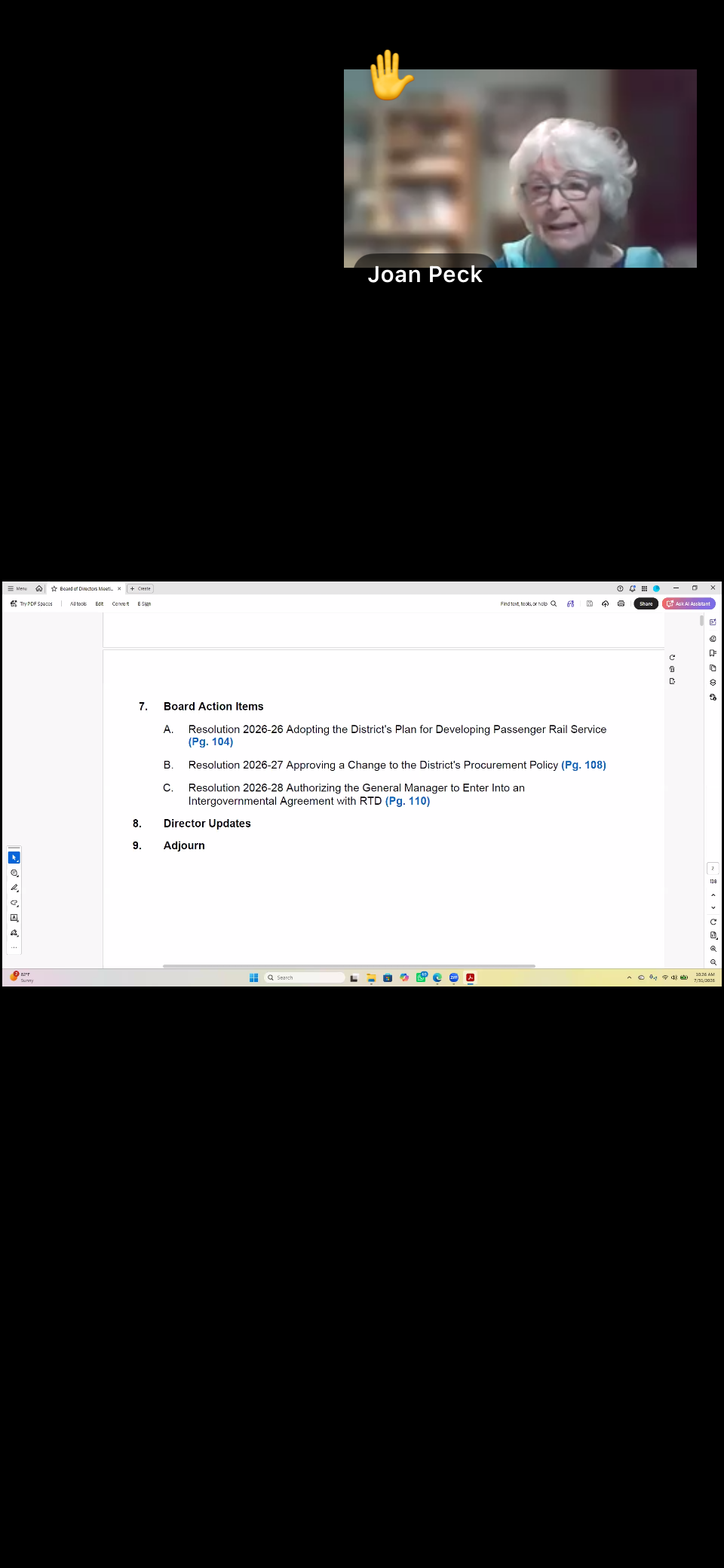
Former Longmont Mayor Joan Peck has been a cheerleader for passenger rail coming to Longmont for years.
So her “yes” vote Friday on the Colorado Connector service plan was probably not the biggest news.
On Friday, the Front Range Passenger Rail District unanimously approved the draft plan to begin passenger rail service with three daily trains between Denver and Fort Collins.
That now moves the discussion toward Aug. 28, when the board is expected to vote on asking voters to approve a new sales tax for passenger rail, with the goal of funding more trains and eventually extending service south to Colorado Springs and Pueblo.
The bigger development may be that Peck and other project supporters are returning to Longmont for another public forum, despite one being held just last week and another in April.
The meeting is at 5 p.m. Monday, Aug. 3, at Front Range Community College and features RTD Director Karen Benker. Longmont Councilmember Alex Kalkhofer, who chaired the city’s Transportation Advisory Board last year, is also helping lead the discussion.
Peck said the biggest question she hears from Longmont residents is simple:
“Why pay twice—or more than anybody else?”
Longmont residents already pay RTD’s FasTracks sales tax. If voters approve a new Front Range Passenger Rail tax, some residents worry they would effectively be paying for both systems while communities like Loveland and Fort Collins do not currently pay into RTD.
I asked Kalkhofer on Friday whether Monday’s meeting is essentially meant to clear up those kinds of misconceptions.
He said that is absolutely why another public forum is needed.
What may make this meeting different, he said, is that it will be led only by Longmont-area leaders. Colorado Connector planners are not involved.
That gives local officials a chance to answer the question in specifically Longmont terms: what residents are already paying, what they could be asked to pay next and whether the city would be getting a fair return.
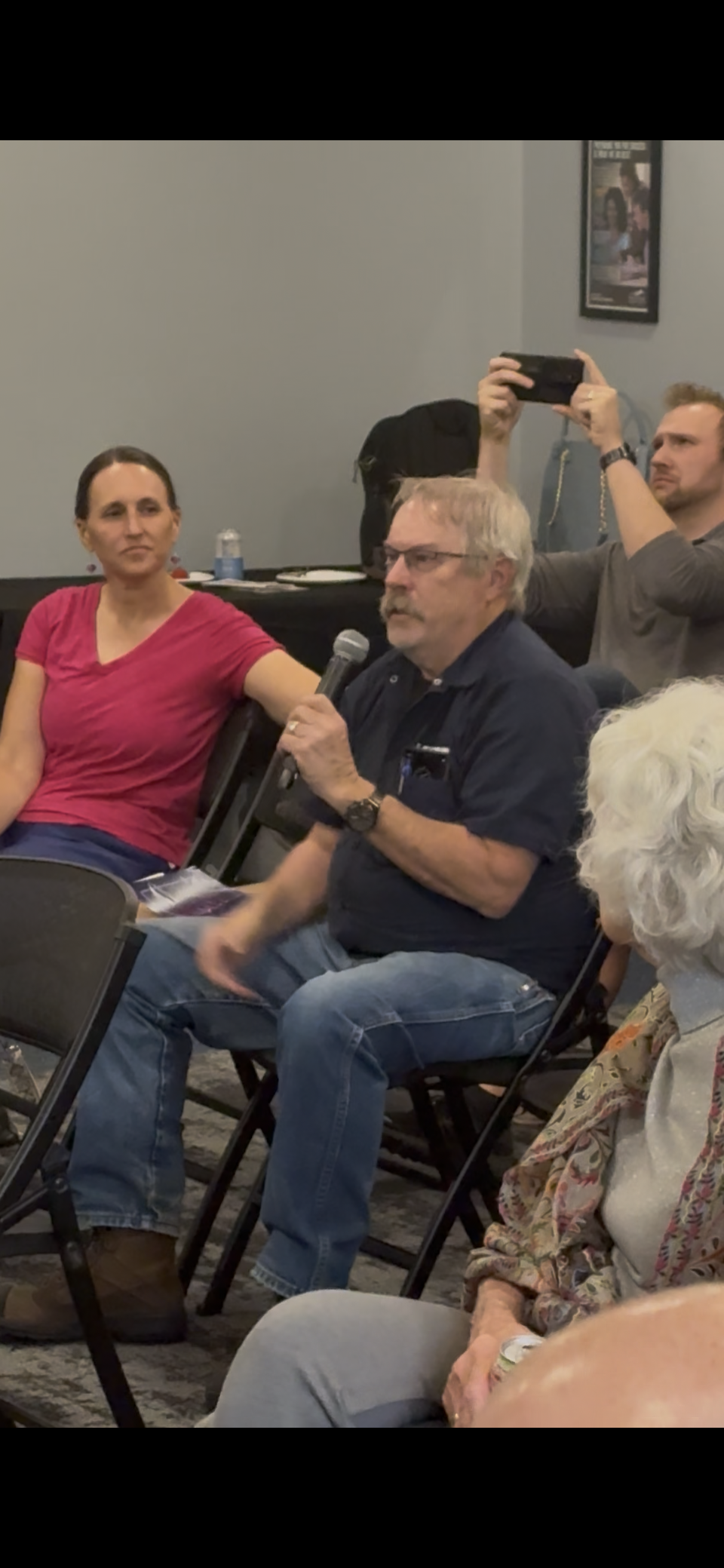
Thompson’s Colorado covered a Colorado Connector meeting in Longmont last week, also at Front Range Community College. About 30 people attended, many of them elected officials or people with a direct stake in Boulder County transportation planning.
The reel from that meeting, however, has now been watched by more than 9,000 people.
I interpret that, at least anecdotally, as a sign that there is still deep community curiosity—and skepticism—about the project.
The discussion on Instagram was fairly balanced. On Facebook, however, skepticism about FasTracks resurfaced quickly, with words like “boondoggle” appearing repeatedly in the comments.
Nearly everyone involved in multimodal transportation planning in Longmont appears enthusiastic about bringing the Colorado Connector here. In recent months, local leaders have taken steps to advance both the proposed rail line and planning for the First and Main station.
That makes Monday night’s forum an important opportunity for residents to hear directly from local project supporters, ask questions and decide whether Longmont is being asked to pay a fair share.