What Does It Take To Build An Affordable Home In Boulder County?
I don't have any building skills. But one afternoon in the Colorado sun built community and taught me how affordable housing works in Boulder County.
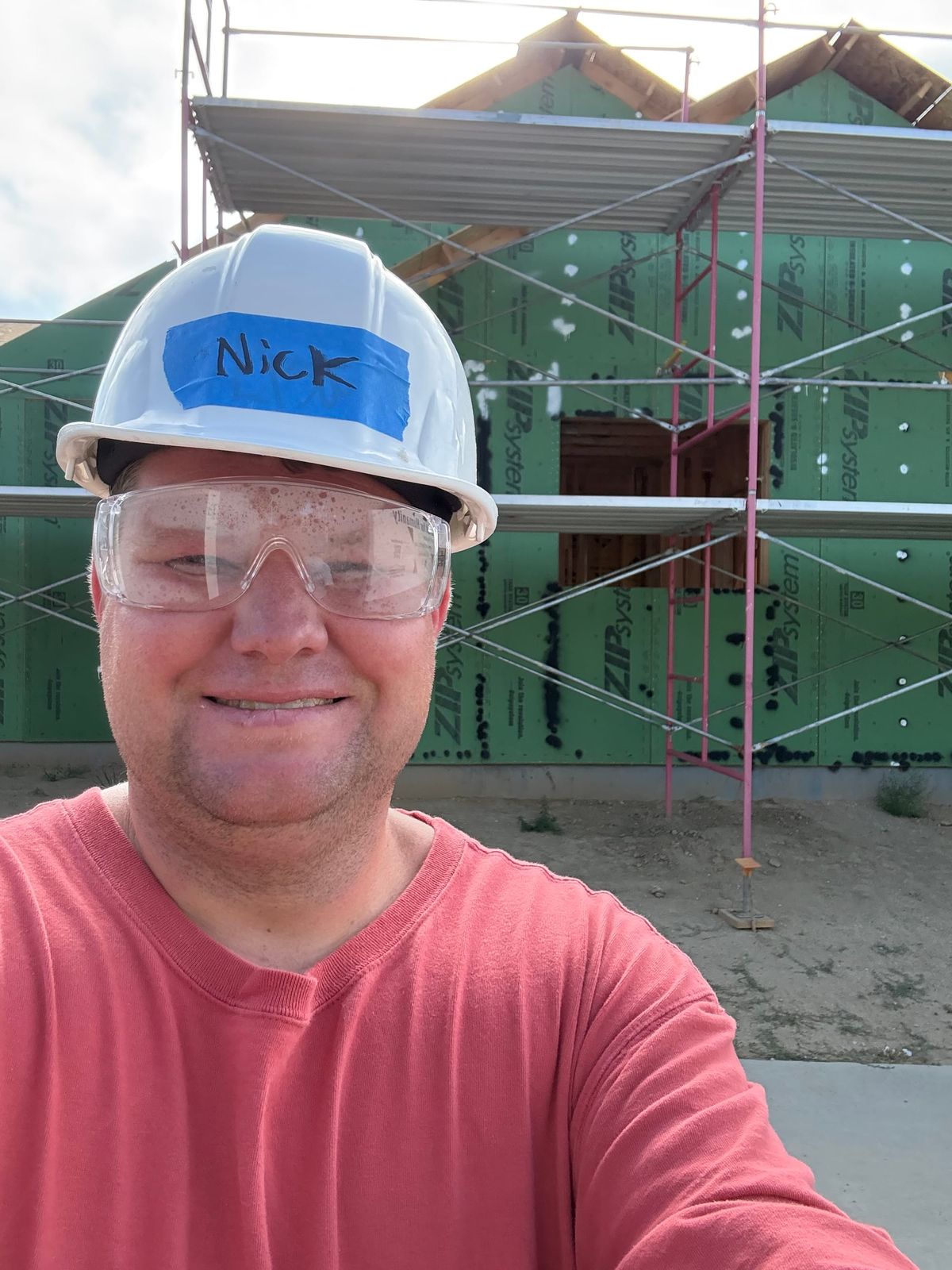
I volunteered Aug. 14 with Habitat for Humanity of the St. Vrain Valley because I needed a positive way to spend some downtime in Longmont—and because I wanted to understand what it takes to build affordable homes in Boulder County.
My volunteer assignment took me to Rogers Road, near Third Avenue and Martin Street in east Longmont.
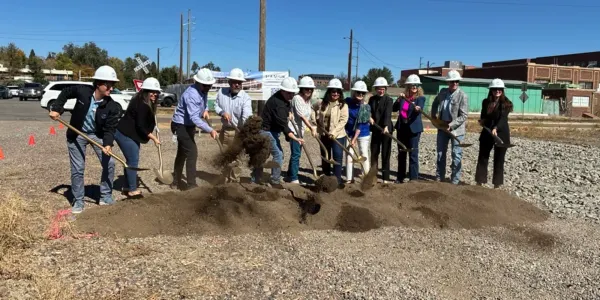
Habitat is building nine homes on a previously vacant property there, divided among three triplexes.
“It really does start with land—and then, of course, the cost of the land that is available,” Executive Director David Emerson said.
Emerson said Habitat assembled the property from two parcels—one purchased and the other donated—in 2017. Vertical construction did not begin until January 2026.
That meant more than eight years spent assembling the property, subdividing it into nine lots, securing city approvals, planning the development and completing the necessary site work before construction could begin.
“We look around and we see a lot of land,” Emerson said. “But it may not be land that actually can be developed because of rules we have in place or other constraints.”
Once Habitat secures developable land, it still has to bridge the gap between what a home costs to build and what its buyers can afford.
The median sale price of a Longmont home was approximately $567,000 in May, according to Zillow. The cost of developing the Rogers Road homes reflects that expensive local market.
Emerson said each home will cost Habitat approximately $400,000 to $500,000 to produce. Selling the homes at that price, however, would hardly make them affordable for the households Habitat is trying to reach.
Grants, cash donations, donated land, infrastructure assistance and Habitat-provided financing help bridge the gap between the cost of development and an affordable purchase price. Habitat plans to sell the Rogers Road homes for approximately $280,000 to $300,000.
“We make sure that their payment, when we originate it, is not more than 30% of their income,” Emerson said.
Habitat gives volunteers a brief presentation about its homeownership program during the lunch break. During that presentation, I learned the homes are intended for households earning between 30% and 60% of the area median income.
The corresponding dollar amount depends on household size, but the requirement targets families priced out of Boulder County’s conventional housing market.
Emerson acknowledged that Boulder County’s open-space protections and land-use policies help preserve many of the qualities that make the area desirable. Those policies also constrain where new housing can be built.
“Both housing and open space are very, very good things,” Emerson said. “But obviously, if you don’t have land to build on, that’s a constraint.”
Emerson said construction costs also increased significantly between Habitat’s acquisition of the property in 2017 and the start of vertical construction in January 2026.
“Construction costs over the last many years have outpaced a lot of other things,” Emerson said.
Those rising costs formed the backdrop as volunteers—including me—worked Aug. 14 to assemble and raise wall frames for the new homes.
Emerson also said a shortage of skilled tradespeople makes affordable housing more difficult to build. Although volunteers perform much of Habitat’s construction work, projects still require professional plumbers, electricians and contractors.
“Those businesses have struggled to get younger people to go into those trades, which often pay very, very well,” Emerson said. “It takes longer to build, and it’s generally more expensive.”
My interview with Emerson was not the first recent conversation in which a community leader described housing as one of Boulder County’s most difficult policy challenges—and one without easy answers.
During a recent interview about a proposed child care tax, Longmont City Councilmember Jake Marsing expressed doubt that he could leave a meaningful mark on housing policy during his tenure. Marsing described housing as an interconnected web involving developers, state law, insurers, tax incentives and other complicated mechanics.
That complexity can make the problem feel distant and impossible to influence. But if affordable housing matters to you, volunteering with Habitat offers one small, tangible way to fight back.
Emerson also connected volunteering with community isolation and broader concerns about mental health.
“I would just implore people to consider volunteering, whether it’s for Habitat or other places,” Emerson said. “It’s an actionable way to better your community when maybe the world seems overwhelming with some of its problems.”
I have few practical building skills and had spent almost no time on a construction site before Aug. 14. But an afternoon with Habitat got me into the Colorado sun, introduced me to some of my neighbors and gave me enough purposeful work to clear my head.
I cannot untangle Boulder County’s housing crisis. But for one afternoon, I could help raise a wall.