I Rode Boulder County’s Most Dangerous Cycling Corridor. Here’s Why a Safer Path Could Cost $95 Million
I rode Boulder County's most dangerous cycling route to see why a $100 million trail is in the works.
I first read about the North Foothills Bikeway Project in the headlines. The nearly $100 million price tag caught me by surprise—as did the danger the project is intended to address.
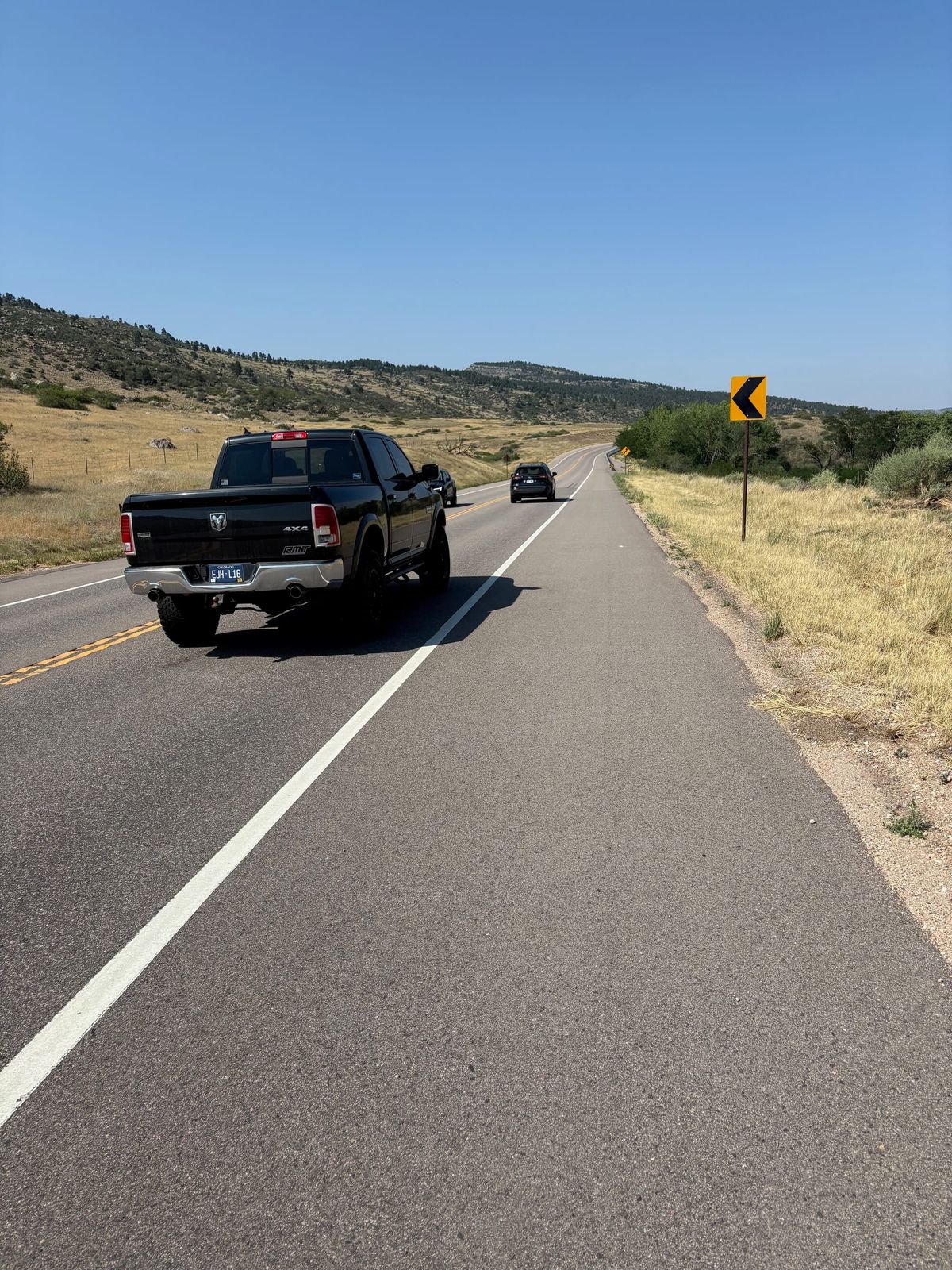
Boulder County is designing an 11-mile separated bikeway along U.S. 36 between Boulder and Lyons, a corridor where six people were killed in crashes involving cyclists and pedestrians between 2015 and 2024. The county estimates construction could cost approximately $95 million.
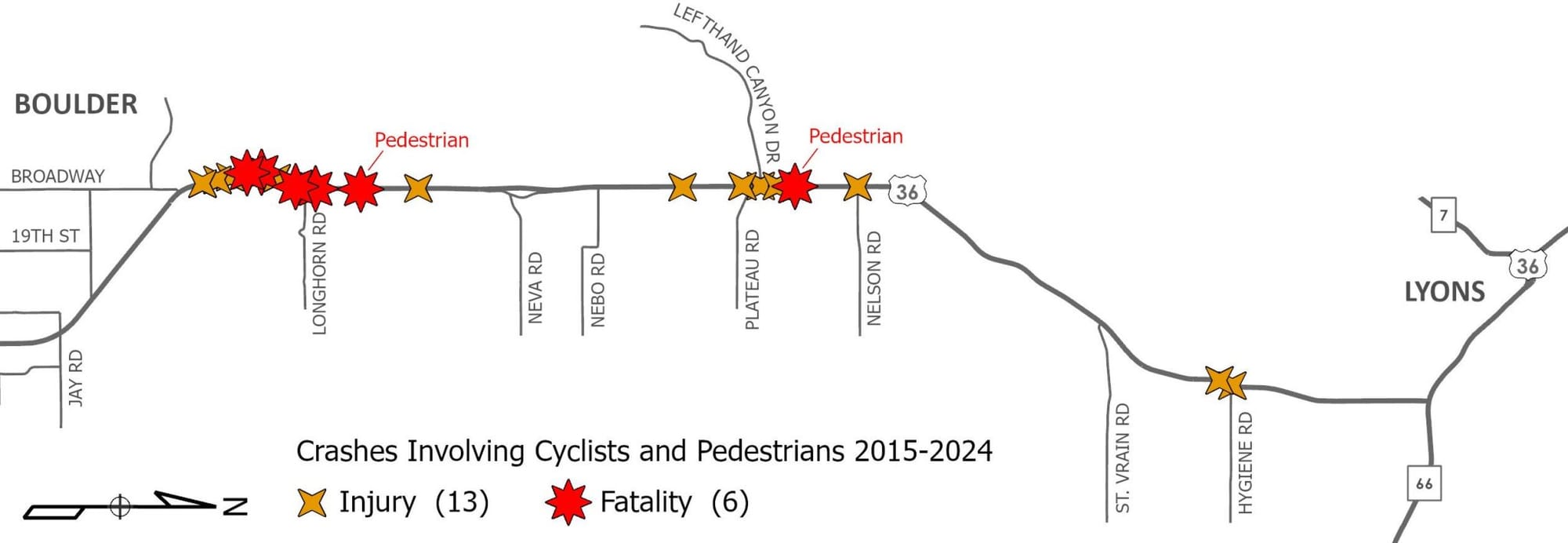
To understand both the price and the problem, I rode the corridor myself.
CLICK HERE to watch the Instagram video of my attempt.
I. Why Do People Take the Risk?
According to CDOT traffic counters, more than 52,000 cyclists ride U.S. 36 between Boulder and Lyons each year.
As an avid road cyclist myself, I can see why.
The corridor is one of the main gateways to cycling in Boulder County. Boulder and Lyons serve as hubs for dozens of popular rides, and U.S. 36 connects directly with routes like Lefthand Canyon, Hygiene and the Peak-to-Peak Highway. If you're heading into the foothills from Boulder, this road is often the most direct route.
I haven't climbed Lefthand Canyon yet, but it's on my bucket list. Standing at the intersection halfway to Lyons, it became clear why so many riders continue using this road despite the risks.
II. A Human Behind the Statistics
About a mile or two north of Boulder, I noticed a simple roadside memorial.
It read: "In Memory of Lucy Ginley."
I later looked up her obituary and learned about her life beyond the crash. Until then, the crashes had mostly been numbers on a county presentation. The sign put a person behind one of them.
Lucy's death wasn't the only tragedy on this road. Several crashes along U.S. 36 have drawn widespread attention over the years, including the 2016 death of Michelle Walters, a 34-year-old athlete who was struck and killed while competing in Ironman Boulder.
III. Seeing the Potential Cost Drivers Up Close
Before my ride, I emailed Boulder County bike planner Alexandra Phillips and asked her to explain the biggest cost drivers. She boiled them down to three: bridges, retaining walls and concrete barriers.
I shot the halfway standup for the Instagram version of this story at Left Hand Creek, where a bridge could be needed. Along the ride, I also passed several places where the land drops steeply away from the shoulder. In those sections, retaining walls would be needed to support the bikeway and keep it within CDOT's right-of-way.
There are also stretches where the trail would have to run close to U.S. 36. In those places, concrete barriers would separate cyclists from highway traffic.
One factor that could help control the cost is land acquisition. Most of the bikeway is expected to run along the east side of U.S. 36 within existing CDOT right-of-way. At the southern end, the route would use land owned by the City of Boulder, which is a partner in the project. That means the county does not expect to purchase private property for most of the corridor.
Seeing the terrain in person made it easier to understand why this is not simply an 11-mile paving project.
IV. What Is the County Doing Now?
The North Foothills Bikeway remains in the design phase. Engineers are refining plans for four locations where the terrain, intersections or connections are especially complicated: the South End near Boulder, Neva Road, Lefthand Canyon and the U.S. 36/Colorado 66 intersection near Lyons.
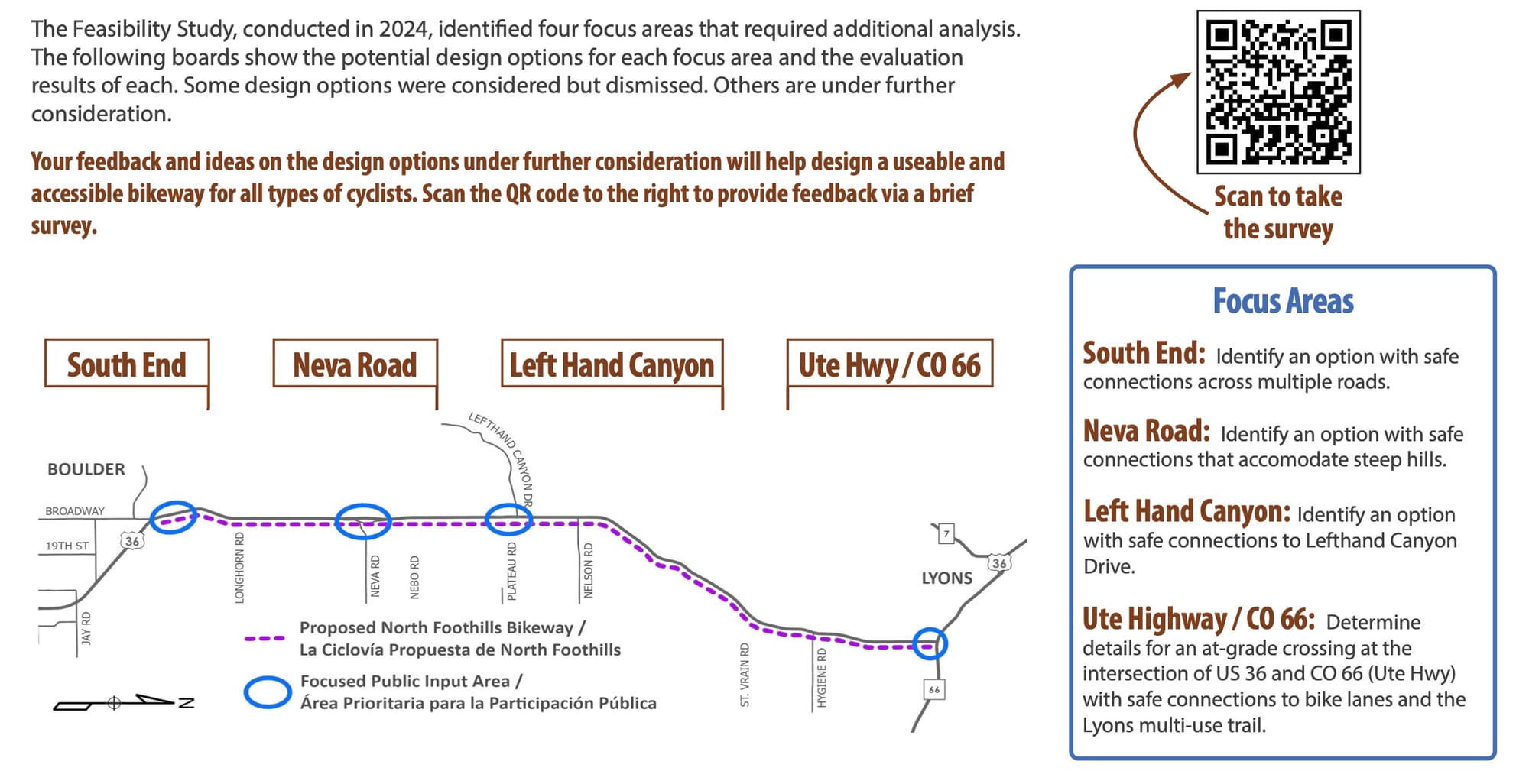
County staff recently completed another round of public engagement, gathering feedback from more than 800 survey responses and an open house back in May. Alexandra Phillips told me those comments are now being used to shape the next phase of design.
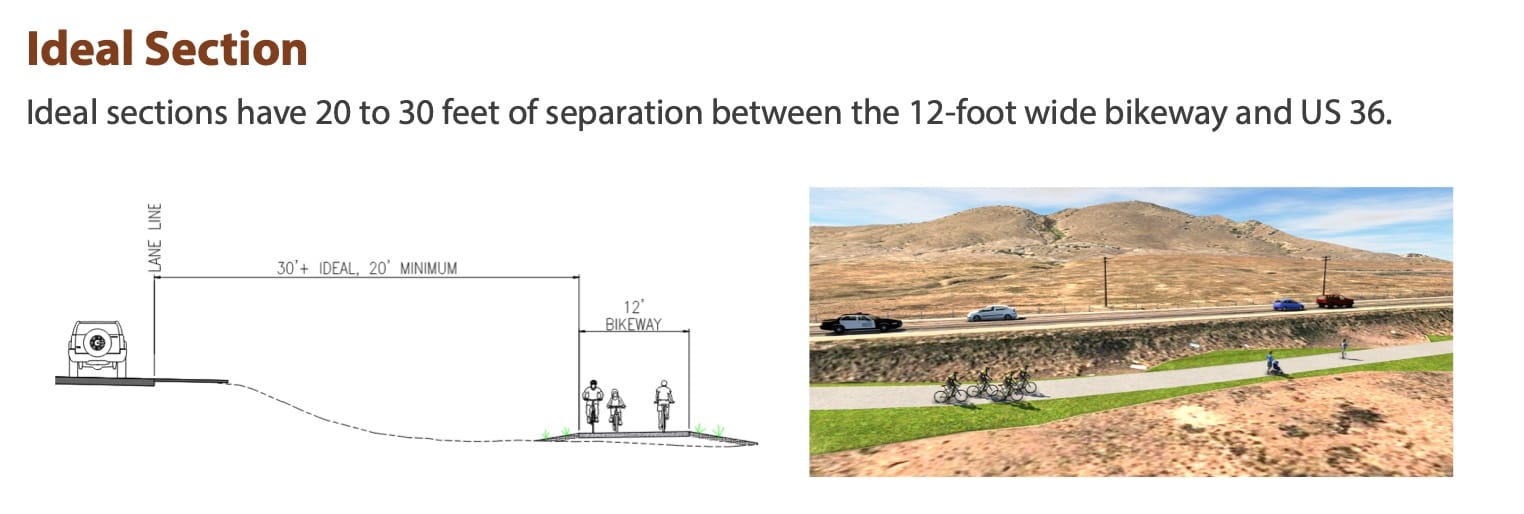
Phillips said the CO-119 bikeway between Boulder and Longmont was built with several federal grants, and that would be the approach with this project.
If construction funding becomes available in phases, Phillips said the county's priority would be the southern portion of the corridor because it has experienced the highest number of crashes involving cyclists and pedestrians.
The county has already applied for a federal Safe Streets and Roads for All grant that would help fund roughly the first mile of the bikeway between Broadway and Longhorn Road. Officials expect the full project to require several state and federal grants, meaning construction would likely occur in stages rather than all at once.
V. Final Thoughts
When I first saw the nearly $100 million price tag, I wondered how an 11-mile trail could possibly cost that much.
After riding U.S. 36, I understand the challenge better. The corridor is anything but flat. It crosses creeks, runs alongside steep embankments and narrows in places where there is little room between the highway and the surrounding landscape.
I'm a serious road cyclist who has logged nearly 750 miles across Colorado this season. Personally, I found the shoulder wide enough in many places and less intimidating than some of the roads I've ridden in Boulder, Weld and Larimer counties.
But I'm not the only person this project is designed for.
If Boulder County's goal is to create a route that feels safe for casual cyclists, families, e-bike riders and visitors, I can certainly see why officials believe a separated bikeway would make a difference.
Overall, I can understand the enthusiasm for this project. I also understand why local residents question the sheer amount of taxpayer money involved in projects like this one and the CO 119 bikeway.
Spending an afternoon riding U.S. 36 didn't answer whether the project is worth $95 million. But it did answer two questions I had going in: why so many cyclists continue using the corridor, and why making it safer won't be cheap.
I'll continue following the grant process and the county funding decisions behind that $95 million price tag.
It takes time to report issues thoroughly like this. If this story helped improve your understanding of this issue, please consider visiting my support page or making a one-time contribution. Thank you for reading!