From 26 Churches To Community Lifeline: OUR Center Celebrates 40 Years Serving Longmont
Founded in 1986, the Longmont nonprofit now serves tens of thousands of meals and distributes more than a million pounds of groceries annually.
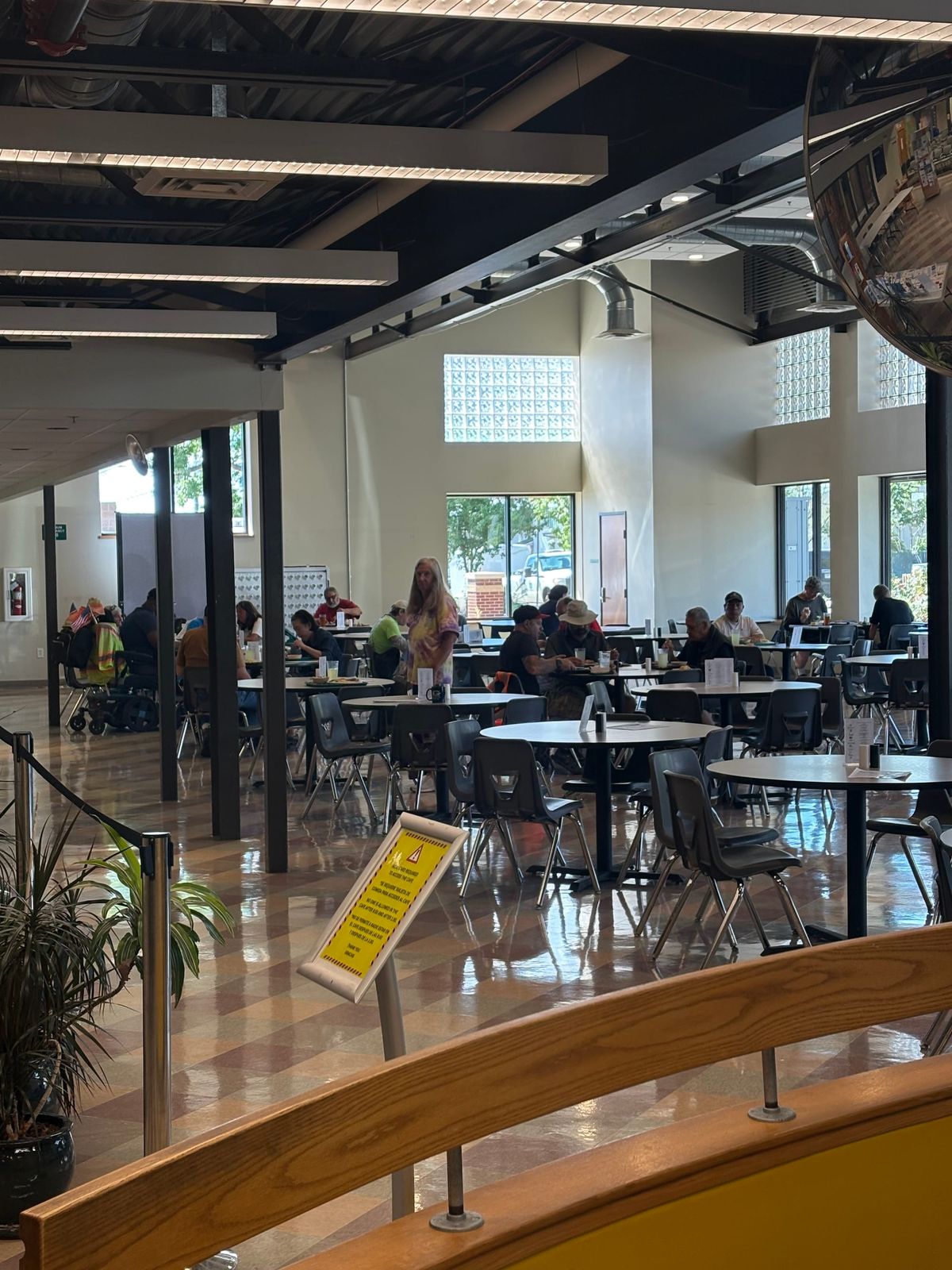
Most days, 72-year-old Stan Toll comes to the OUR Center for a meal.
After injuries and illness, Toll found himself living in a van. He has a place where he can do some cooking, but preparing food on his own is not always easy.
"I almost do this every day because after some injuries and illness, I wound up living in a van," Toll said. "This kind of — it's become a survival place for me."
Toll relies on Social Security and says Longmont's housing costs have put a permanent home beyond what he can afford. For now, he hopes to purchase a better vehicle to live in and find somewhere he can park it permanently.
"What I'm right now is I'm basically trying to put money away to possibly be able to get a better situation," he said. "I don't know whether that's going to happen or not."
Toll is among the residents who rely on the OUR Center, which celebrates 40 years of serving Longmont and the surrounding St. Vrain Valley this month.
Founded by 26 churches in 1986, the nonprofit has grown from a centralized source of food, clothing and emergency financial assistance into a broader network of services. Its latest publicly available federal tax filing reports 62,475 hot meals served and more than 1.07 million pounds of groceries and personal-care items distributed during the fiscal year ending June 2025.
For Elaine Klotz, who joined the OUR Center in May 1999, the anniversary offers a chance to reflect on four decades of changing services — and a mission that remains familiar.
"I just can't believe that we're to this point already celebrating 40 years," Klotz said. "But it's been quite an incredible journey."
A place to turn for help
The OUR Center's origins date to the mid-1980s, when Longmont was growing and local service organizations were struggling to keep up with demand.
Klotz said members of the Longmont Ministerial Association were seeing families go from church to church looking for assistance. The Rev. Alan Landis, then pastor of Central Presbyterian Church, helped lead an effort to bring churches and civic leaders together around a single resource center.
Twenty-six churches participated.
"So instead of going from door to door and really not helping those families long-term, they could focus their efforts into one resource center," Klotz said.
The organization was incorporated Sept. 25, 1986.
When Klotz arrived in 1999, the OUR Center was separating from an administrative arrangement with Boulder-based Emergency Family Assistance Association and becoming a fully independent Longmont organization.
She had previously worked in banking, insurance and other private businesses. After seeing a newspaper advertisement for an administrative assistant position, she decided to make a change.
"I just always wanted to be a place where I felt like I was giving back, that I was actually helping people, not just earning a paycheck," she said.
Klotz already knew about the OUR Center through her church, one of its founding congregations. She joined as the organization was expanding its ability to respond to needs across the St. Vrain Valley.
More meals, groceries and services
When Klotz started, the OUR Center focused largely on food, clothing, housing and utility assistance. Today, those services are part of a wider approach that includes financial-skills and parenting education, child care, health partnerships and referrals to other organizations.
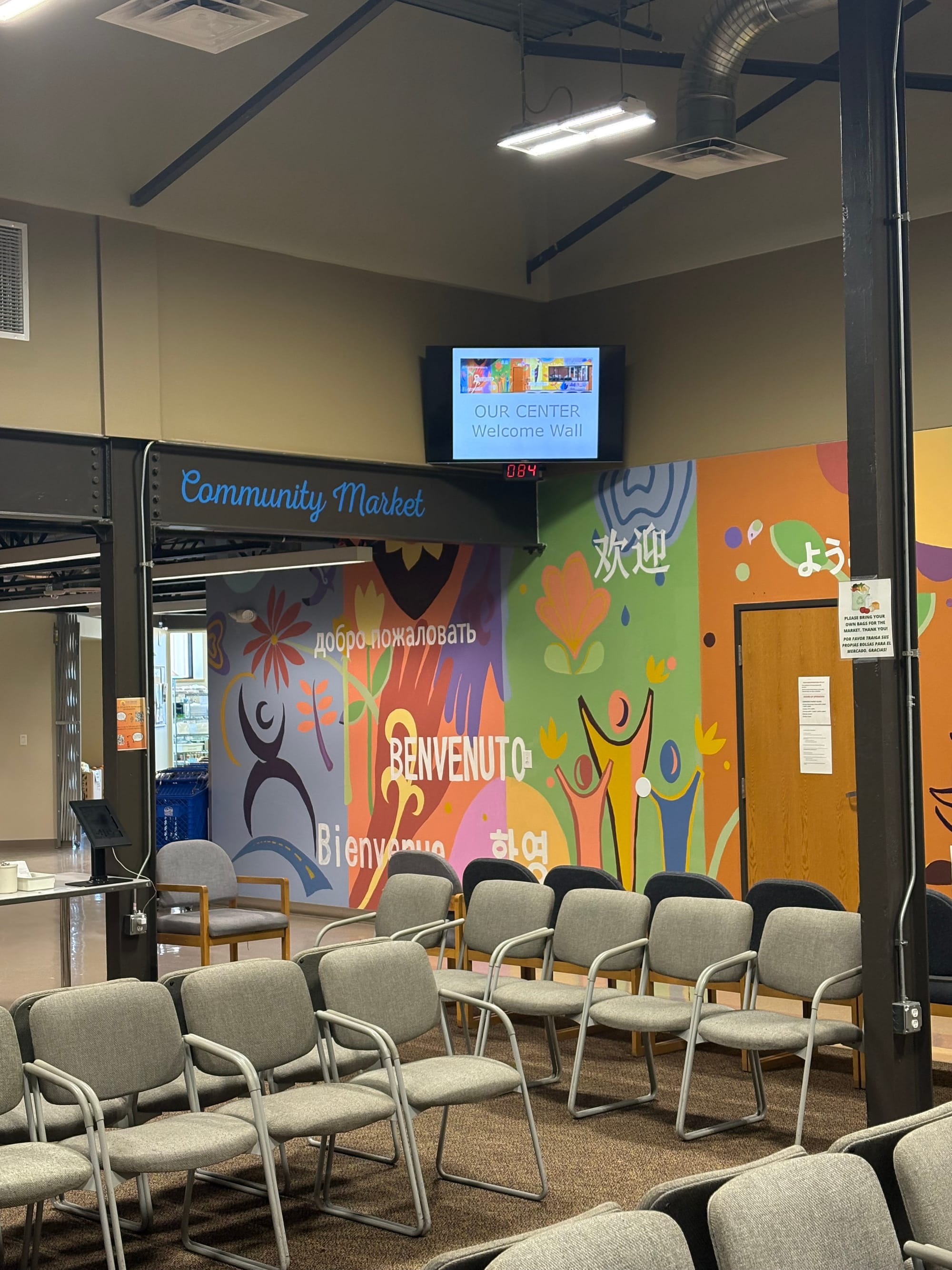
Its Community Market offers groceries, including perishable foods, giving families access to more than the shelf-stable items typically associated with a food pantry.
According to program information in its fiscal 2025 tax filing, the Community Market served an average of 75 households a day. The organization also reported providing homelessness-prevention services to about 700 households, conducting more than 18,000 assistance interviews and recording 3,250 participants in Family Resource Center classes, programs and services.
Klotz said the center's expanded building has allowed more organizations to offer services in one place, making it easier to connect people with help beyond their immediate needs.
"Because it's not one size fits all," she said. "What you need is going to be different than what the next family needs. And everybody's situation is different."
The organization has also made difficult decisions about which services to keep.
Its longtime clothing bank closed in 2025 after use dropped to roughly five or six families a day, Klotz said. Meanwhile, the food market was serving approximately 70 to 120 families daily.
Processing incoming clothing donations took substantial staff and volunteer time, so the OUR Center redirected the space toward expanding the market, adding classrooms and accommodating partner organizations.
Food distribution has become a particularly visible measure of the center's changing role. But Klotz said housing and utility assistance remain central to its efforts to help households avoid homelessness.
Need persists as funding changes
The COVID-19 pandemic dramatically increased demand.
During the first six months of the crisis, the OUR Center reported providing 19,381 prepared meals, more than 565,000 pounds of food and $506,232 in rent and utility vouchers.
Klotz said additional federal funding during the pandemic enabled the organization to provide substantially more housing assistance. Those emergency resources eventually ended.
"So that went away," she said. "But the need really hasn't."
The nonprofit's financial scale has grown over time. Its federal tax filings show annual revenue increasing from approximately $5.11 million in fiscal 2019 to $7.51 million in fiscal 2025.
Klotz said preliminary figures for the fiscal year ending June 2026 indicated that individuals provided about 40% of the organization's financial support. Local government accounted for roughly 30-some percent, followed by foundations at about 20%. The figures had not yet been audited when she was interviewed.
City and county records illustrate the role of public funding. Longmont awarded the OUR Center $123,881 in human-services funding for 2026, supporting basic needs, the Community Market and Café, and direct housing assistance. Boulder County's 2025 Community Partnership Grant awards included $532,534 for the organization's family-resource and housing-stabilization programs.
Even with those resources, Klotz said the OUR Center cannot meet every request for financial assistance. Staff may instead connect residents with other programs or help them reduce expenses through the market and meal services.
She pointed to rising living costs, wages that have not kept pace and the expense of child care as continuing pressures on local households. The OUR Center operates two child care centers with tuition based on household income, though Klotz said the need for affordable care exceeds what the organization can provide.
Housing costs are a particular challenge for Toll. The U.S. Census Bureau puts Longmont's median gross rent at $1,816 a month — a figure that helps put his search for an affordable place to live in context.
Toll said he has encountered obstacles navigating housing assistance and often feels directed elsewhere when seeking help.
"Most of the time they want you to go to Denver," he said. "I'm a 30-year resident of the city of Longmont."
For now, the meals at the OUR Center help him preserve part of his income while he considers his next step.
Celebrating 40 years
The OUR Center will mark its 40th anniversary with a community celebration Saturday, Sept. 26, from 3 to 8 p.m. at its Family Resource Center, 220 Collyer St. in Longmont.
The event will feature live music by Charted Territory, food trucks and desserts, family activities and a look back at the organization's 40-year history.
Sponsored by the Stewart Family Foundation, the celebration is open to the community.
The next 40 years
Churches remain involved in the OUR Center through financial contributions and volunteers, including teams that help provide weekend and holiday meals. Individual donors, businesses, foundations, local governments and partner agencies have joined that network of support.
Forty years after 26 churches came together to establish a place where people could seek help, the OUR Center continues to adapt to the needs of the community it serves.
Kotz said its future depends on remaining responsive to those needs and maintaining the community's trust.
"I think it's just to continue to, again, earn the trust of the community and just continue to be as authentic as we can to our mission of helping people to self-sufficiency," she said.
"And it takes, as the saying goes, it takes a village. You know, it just takes hundreds and hundreds of people to be able to do that."